



As winter’s chill settles in, the task to winterize pipes moves to the top of every homeowner’s to-do list-and for good reason. A single frozen, burst pipe is one of the most dreaded home emergencies, capable of causing thousands of dollars in water damage and turning your sanctuary into a stressful disaster zone. The uncertainty can be overwhelming: which pipes are most at risk, and can you handle the job yourself without causing more harm?
That’s why our seasoned team is here to provide clarity and confidence. We believe that protecting your home shouldn’t be a source of anxiety. In this step-by-step guide, we’ll provide the actionable checklist and professional tips you need to secure your plumbing for the season, whether your home is lived-in or vacant for the winter.
You’ll learn how to handle everything from exposed pipes in the crawl space to outdoor faucets, giving you the peace of mind that comes from knowing your home is protected. Our goal is to empower you to tackle this job safely, helping you avoid that stressful, expensive emergency call and understand exactly when a problem is best left to a trusted expert.
Why Winterizing Your Pipes is a Non-Negotiable Task
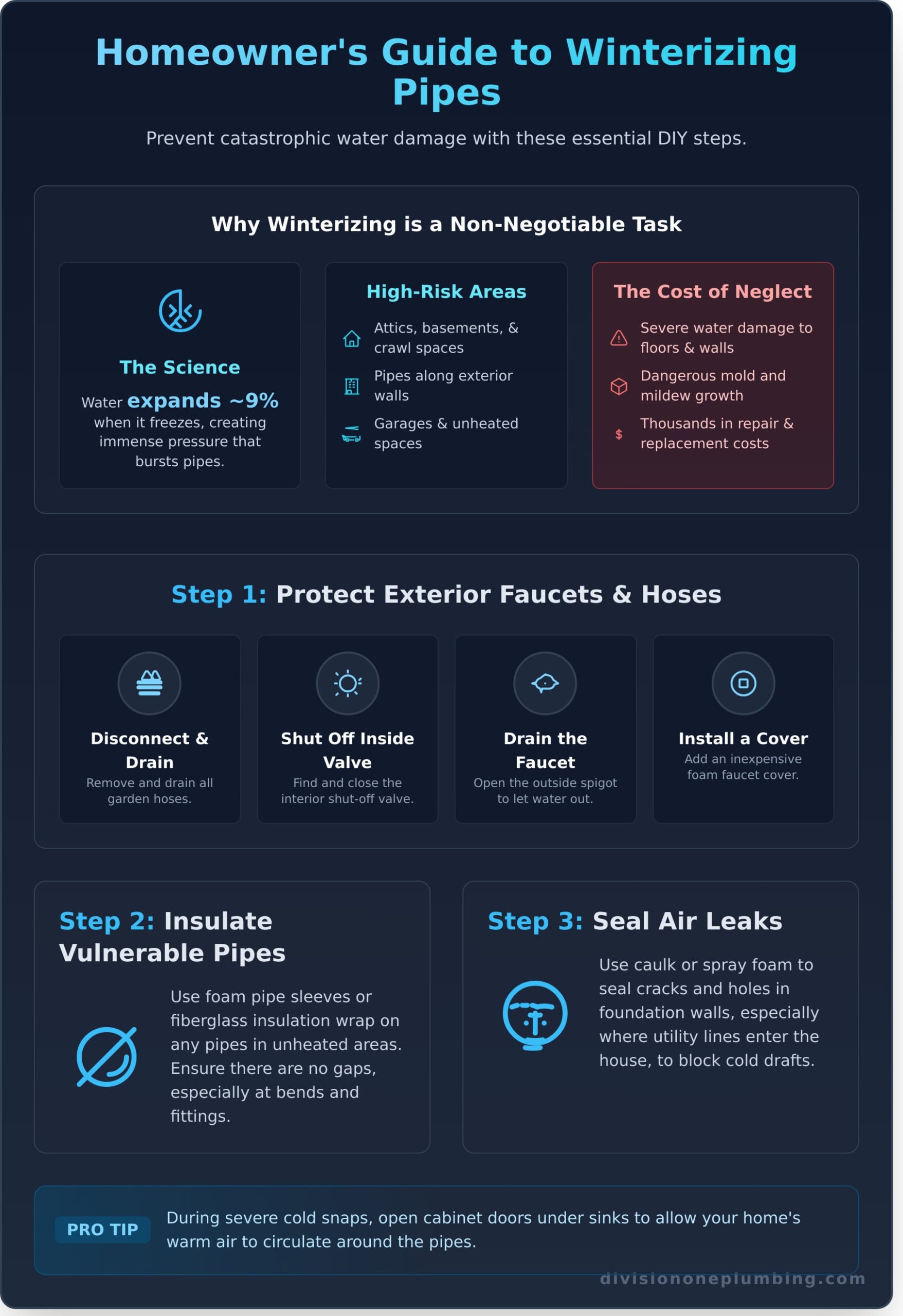
As cold weather approaches, one task stands above the rest for protecting your home: preparing your plumbing for freezing temperatures. To properly winterize pipes is not just a suggestion-it’s an essential step to prevent a costly disaster. If you’re wondering, What is winterization?, it’s the process of taking proven, protective measures to safeguard your systems from the cold. The reason is simple science: when water freezes, it expands by about 9%. Inside a sealed pipe, this expansion creates immense pressure. It’s this incredible force, not the ice itself, that causes a pipe to burst.
Your home’s plumbing is not equally at risk. The most vulnerable pipes are those located in uninsulated or unheated areas where the cold can easily penetrate, including:
- Unheated basements and crawl spaces
- Attics and garages
- Pipes running along exterior walls
- Outdoor hose bibs and sprinkler lines
The Science Behind a Burst Pipe
A burst pipe doesn’t happen where you might think. As temperatures fall, an ice blockage forms inside a pipe, stopping the flow of water. This traps water between the blockage and a closed faucet. As more water freezes and expands, the pressure builds in this trapped section. Eventually, the force becomes too great for the pipe wall to contain, causing a rupture. This risk isn’t limited to one type of material; copper, steel, and even modern PVC pipes can fail under this extreme pressure.
The Staggering Cost of Neglect
The cost of a burst pipe goes far beyond a simple plumbing repair bill. The resulting water damage can be financially and emotionally devastating, leading to a cascade of problems that compromise the safety and integrity of your home. A single rupture can quickly lead to:
- Saturated and ruined drywall and insulation
- Warped or destroyed flooring and subflooring
- Damage to furniture, electronics, and irreplaceable personal belongings
- The dangerous growth of mold and mildew in damp areas
Taking proactive steps to winterize pipes is a small, smart investment that protects your property and provides invaluable peace of mind. It’s the most reliable way to avoid a stressful and expensive ordeal, ensuring your home is secure all winter long.
Essential Winterization Steps for Occupied Homes
When you live in your home through the winter, your goal is to protect your plumbing without completely shutting it down. The key is to focus on the transition points where your home’s warm interior meets the freezing temperatures outside. The following are simple, high-impact DIY steps any homeowner can take to winterize pipes and prevent a costly, stressful emergency. These reliable measures will keep your plumbing functioning safely all season long.
Protecting Exterior Plumbing: Faucets and Hoses
Your outdoor spigots are the most exposed part of your plumbing system. Protecting them is a non-negotiable first step in your winterization checklist. A frozen hose bib can crack and cause major water damage inside your walls before you even notice the problem.
- Step 1: Disconnect and Drain. Disconnect all garden hoses, drain them completely, and store them in a garage or shed. Leaving a hose attached is the number one cause of frozen outdoor faucets.
- Step 2: Shut Off the Water. Locate the interior shut-off valve for each outdoor faucet (usually found in a basement or crawl space) and turn it to the “off” position.
- Step 3: Drain the Faucet. Go back outside and open the spigot to let any trapped water drain out completely. Leave it open for the winter.
- Step 4: Add an Insulated Cover. For an extra layer of security, install an inexpensive foam faucet cover over the spigot.
Insulating Vulnerable Pipes
Any water pipe located in an unheated or poorly insulated area is at high risk of freezing. Pay close attention to plumbing in crawl spaces, basements, attics, and garages. Insulating these pipes is a simple task that slows heat loss, keeping the water inside above freezing. We recommend using foam pipe sleeves or fiberglass insulation wrap, both available at any hardware store. Ensure the insulation is snug and that there are no gaps, especially at bends and fittings where pipes are most vulnerable.
Sealing Air Leaks and Other Simple Fixes
Even a small draft can be enough to freeze a pipe located near an exterior wall. Use caulk or spray foam to seal any cracks or holes in your foundation or walls, particularly where utility lines enter the house. Other simple but effective measures include keeping your garage door closed and, during severe cold snaps, opening the cabinet doors under your kitchen and bathroom sinks. These small adjustments, along with other professional winterizing tips for your plumbing, allow warm air to circulate and can make a significant difference when temperatures plummet.
Complete Guide: Winterizing a Vacant Property
If you have a vacation home or a property that will be empty for the winter-perhaps due to an upcoming move-you need a more thorough approach to prevent catastrophic pipe bursts. While moving and cleaning companies like SwissDem Services handle the logistics of the relocation itself, homeowners are responsible for securing the vacant property. Unlike an occupied home where you keep the heat on, the goal here is to remove all water from the plumbing system. This is the most reliable way to winterize pipes in an unattended property and ensure you don’t return to a costly disaster. Being meticulous is key to complete peace of mind.
Step 1: Shut Down and Drain the Entire System
The first and most critical phase is cutting off the water supply and draining every drop you can by gravity. This process empties the main lines, fixtures, and appliances, leaving less work for the next steps. Our licensed professionals follow a trusted, systematic process:
- Turn Off the Main Supply: Locate the main water shut-off valve for the house and turn it completely off.
- Power Down the Water Heater: Turn your water heater to the “Pilot” or “Off” setting. Then, shut off its dedicated water supply valve.
- Open All Fixtures: Go through the house and open every faucet, including sinks, showers, and tubs (both hot and cold). Flush all toilets until the tanks are empty.
- Drain the Water Heater: Connect a garden hose to the drain valve at the bottom of the water heater and run it to a floor drain or outside. Open the valve to empty the tank completely.
Step 2: Blowing Out the Lines with Compressed Air
Even after a gravity drain, water can remain in low points and bends in your pipes. An air compressor is the professional’s tool for forcing this stubborn water out. This crucial step ensures no hidden water pockets remain, a key part of the American Red Cross’s guidance on Preventing and thawing frozen pipes. Connect the compressor to your system (often via an outdoor spigot or laundry hookup) and use a low pressure-never exceed 50 PSI-to avoid damaging your pipes. Go to each faucet one by one, opening it until only air and a fine mist come out.
Step 3: Using Non-Toxic Antifreeze for Final Protection
The final step is to protect your drains and fixtures. It’s essential to use a non-toxic RV/marine antifreeze that is specifically designed for plumbing systems. Pour this antifreeze into every sink, tub, and shower drain to fill the P-trap, which prevents sewer gases from entering your home and stops any residual water from freezing. You should also pour antifreeze into toilet bowls and tanks to protect the porcelain from cracking. This provides a final, reliable layer of defense against the freezing temperatures.
Properly winterizing a vacant property is a detailed job, but it’s the best investment you can make to protect your home. If you’re unsure about any step of the process to winterize pipes, our experienced team is here to help. Contact the fast, friendly professionals at divisiononeplumbing.com for reliable service.
When to Call a Professional Plumber for Winterization
While many homeowners can handle basic winterization tasks, some situations require the skill and experience of a seasoned professional. Attempting a complex job without the right knowledge or tools can lead to incomplete protection or even damage your plumbing. Investing in a professional service isn’t just about getting the job done-it’s about gaining the peace of mind that comes from knowing your home is truly protected by a trusted expert.
Signs You Need an Expert’s Help
Knowing your limits is key to preventing a winter plumbing disaster. If you encounter any of the following, it’s a clear sign to call in a licensed plumber to winterize pipes correctly:
- You cannot locate or operate your main water shut-off valve. This is the most critical step. If you’re unsure about the valve’s location or it’s stuck, forcing it could cause it to break.
- Your home has older, fragile, or complex plumbing. Cast iron or galvanized steel pipes can be brittle. A professional knows how to handle these delicate systems without causing leaks or cracks.
- You need to winterize a sprinkler system or pool lines. These systems require a compressed air blowout to completely clear the lines of water, a task that demands specialized equipment and expertise to avoid damaging the lines.
- You simply lack the time or confidence. An incomplete job is as risky as no job at all. If you’re not 100% confident, it’s always safer to rely on an experienced team.
What to Expect from a Professional Service
When you hire a trusted team like Division One Plumbing, you get more than just a quick fix. Our comprehensive winterization service is designed for complete protection and includes:
- A thorough inspection of your entire plumbing system, including interior pipes, outdoor faucets, and crawl spaces.
- Proper draining of all necessary lines and, if required, a professional blowout to ensure every drop of water is removed.
- Correct application of high-quality insulation on vulnerable pipes and protection for all exterior fixtures.
- A detailed report of the work we performed and professional recommendations for any areas of concern.
Protecting your home from the harsh winter weather doesn’t have to be a pipe dream. Don’t risk the costly damage of a burst pipe. Get professional winterization from Division One Plumbing. Our licensed, bonded, and insured professionals are ready to ensure your home is secure all season long.
Your Winter Peace of Mind Starts Here
As we’ve covered, protecting your plumbing from freezing temperatures isn’t just a suggestion-it’s an essential task to prevent catastrophic damage. From insulating exposed pipes in an occupied house to fully draining the system in a vacant property, these proactive steps are your best defense against a burst pipe emergency.
When you want absolute certainty that the job is done right, the trusted professionals at Division One Plumbing are here to help. With over 25 years of experience serving the Spokane area, our licensed, bonded, and insured team has the expertise to properly winterize pipes and safeguard your property. We deliver reliable, high-quality work that gives you complete confidence.
Don’t wait for a disaster. Call the fast, friendly professionals at Division One Plumbing to winterize your home. With our 24/7 emergency service, you can rest easy knowing we’re always here for you. Protect your investment and enjoy a worry-free winter.
Frequently Asked Questions About Winterizing Pipes
How cold does it have to be for pipes to freeze?
The critical temperature for pipes to freeze is generally considered 20°F (-6°C). However, this isn’t a firm rule. Pipes in uninsulated areas like crawl spaces, attics, or exterior walls are at risk even when temperatures are closer to 32°F (0°C), especially during a prolonged cold snap. Proactive protection is always more reliable than waiting for the temperature to drop, as the actual freezing point depends heavily on the pipe’s location and exposure.
Is leaving a faucet dripping enough to prevent pipes from freezing?
Allowing a faucet to drip can be a helpful temporary defense during an unexpected cold front, as moving water is more difficult to freeze. However, it should not be your primary strategy. A slow drip is not a guaranteed solution and is no substitute for proper insulation and other winterization techniques. For trusted, long-term protection against the harshest winter weather, a comprehensive approach is always the most dependable and effective solution for your home.
What is the best type of insulation for water pipes?
For most residential applications, foam pipe sleeves are an excellent, cost-effective choice. They are easy to install and come in various sizes to ensure a snug fit. For pipes in extremely cold or exposed locations, fiberglass pipe wrap provides a higher level of thermal resistance. The most important factor is complete coverage; even small gaps can leave a pipe vulnerable. Our seasoned team can help you choose and install the right insulation for maximum protection.
Can modern PEX pipes freeze and burst like copper pipes?
While PEX piping is more flexible than copper and can expand under pressure, it is not freeze-proof. PEX pipes can and do freeze in sustained sub-freezing temperatures. Although they are less likely to burst from a single freeze event, repeated freezing can weaken the material and damage fittings or joints, leading to leaks once a thaw occurs. All plumbing systems, regardless of material, require proper winterization to prevent costly damage and ensure reliable operation.
How much does it cost to have a plumber winterize my house?
The cost to professionally winterize pipes depends on several factors, including the size of your home and the accessibility of your plumbing system. A basic service for exposed pipes is typically very affordable. A more comprehensive job that includes draining outdoor lines and insulating pipes in crawl spaces will cost more. We are committed to honest, transparent service and always provide upfront pricing so you can approve the cost before our work begins.
What should I do if my pipes have already frozen?
If you discover a frozen pipe, immediately shut off your home’s main water supply to prevent a flood if the pipe bursts. Never use a torch or open flame to thaw it. You can try gently warming the area with a hairdryer on a low setting or by applying warm towels. If you cannot safely locate the freeze or if the pipe has already cracked, call a licensed professional right away. Our team is available 24/7 for emergency plumbing situations.
